 Rivet Nut USA Q&A
Answer
This question has not yet been answered.
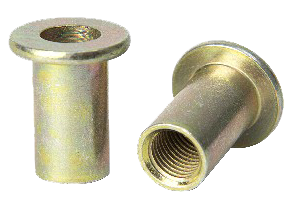
A Rivnut® is kept from spinning by installation, which creates a bulge and the bluge offers clamp load and mechanical engagement with the hole.
When installed, the backside of the Rivnut collapses and bulges behind the parent material, pulling the Rivnut tight against both the front and back surfaces. This clamping action creates friction that helps reduce the risk of spinning.
Most rivet nuts offer a round body, and should be relied upon for only moderate spin out resistance.
Certain applications, such as automotive or agricultural equipment, demand higher spin out resistance, where a regular round body rivet nut may not be sufficient.
Adding knurls or ribs to a round body rivet nut can improve spin out resistance in softer materials, where the knurls can grab or dig into the parent material.
For maximum spin out resistance, manufacturers rely on hex body rivet nuts, which require a hex shaped hole. A hex body rivet nut dramatically increases resistance to spinning.
Other conditions that can lead to premature spinning include:
Incorrect grip range
Under-setting during installation
If a rivet nut does begin to spin, it can typically be drilled out using a drill bit slightly smaller than the original hole size. The rivet nut will usually split into two pieces, allowing the original hole to remain intact. A replacement rivet nut of the same size and type can then be installed, often without any need for major rework. This ease of "drill and replace" is a key advantage of rivet nuts.
Do you have the same question? Follow this Question
This question has not yet been answered.

View all Rivnut® Questions & Answers